
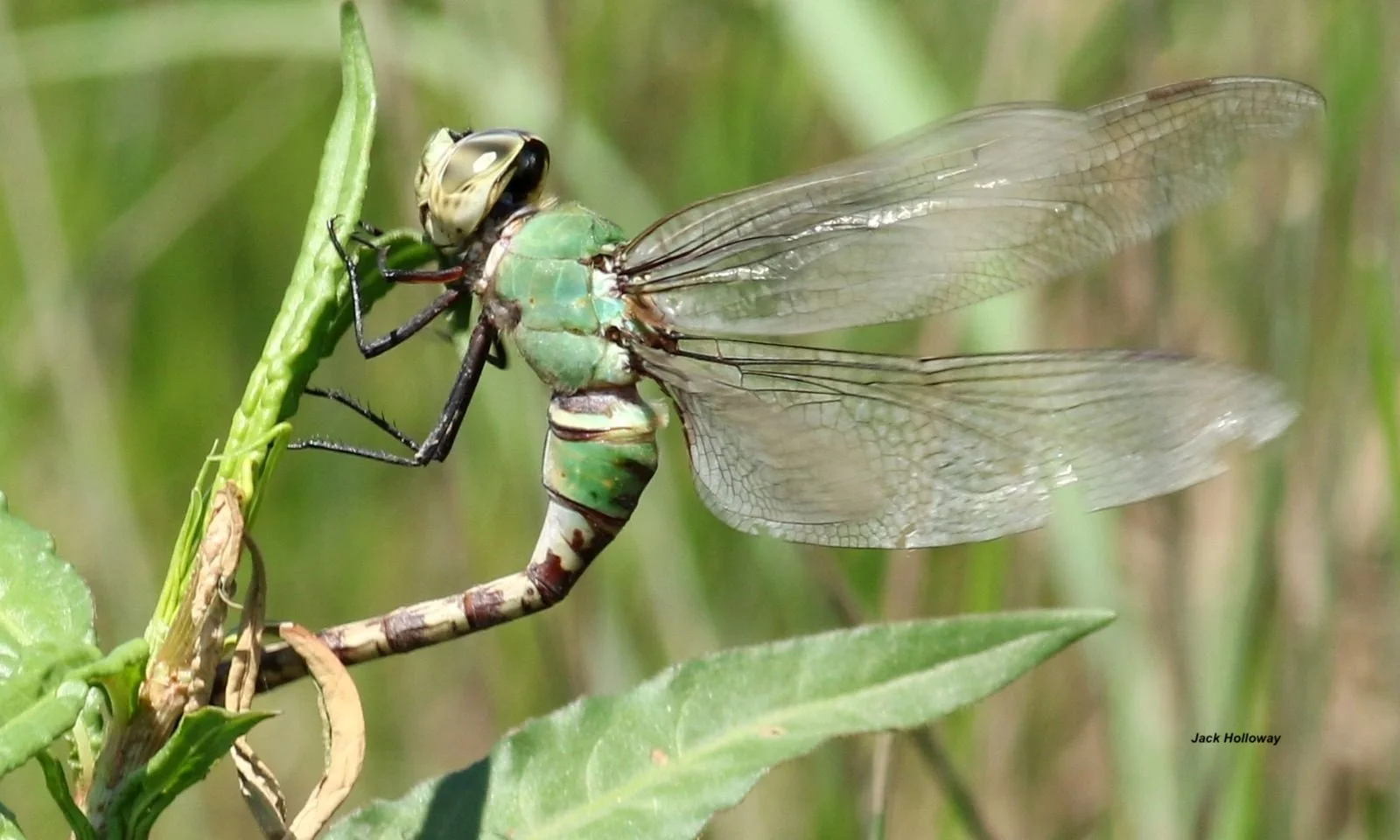
Amazon Darner (Anax amazili) female, Arivaca Cienega, Pima Co., Arizona, USA, 04 August 2026. Copyright Jack Holloway.
September Species of the Month:
Amazon Darner (Anax amazili)
DSA’s species of the month is Amazon Darner (Anax amazili) in the Darner/Aeshnidae family. It is a larger darner around 75mm (2.8 inches). The female stands out even in flight with its boldly patterned ivory and chocolate abdomen. Ranging widely from Brazil north through Mexico and into the Greater Antilles, this species is erratic in the United States. It is found spottily and infrequently in Texas and Florida, with only recent vagrancy to Arizona. Join Jack Holloway as he recounts his journey to fit this species into a special ongoing puzzle.
Pardon the Irruption
It seems a good story often revolves around a nemesis. Making it even more compelling is that nemesis leaving the story with unanswered questions – with an enigmatic conclusion preserving the mystery of said nemesis.
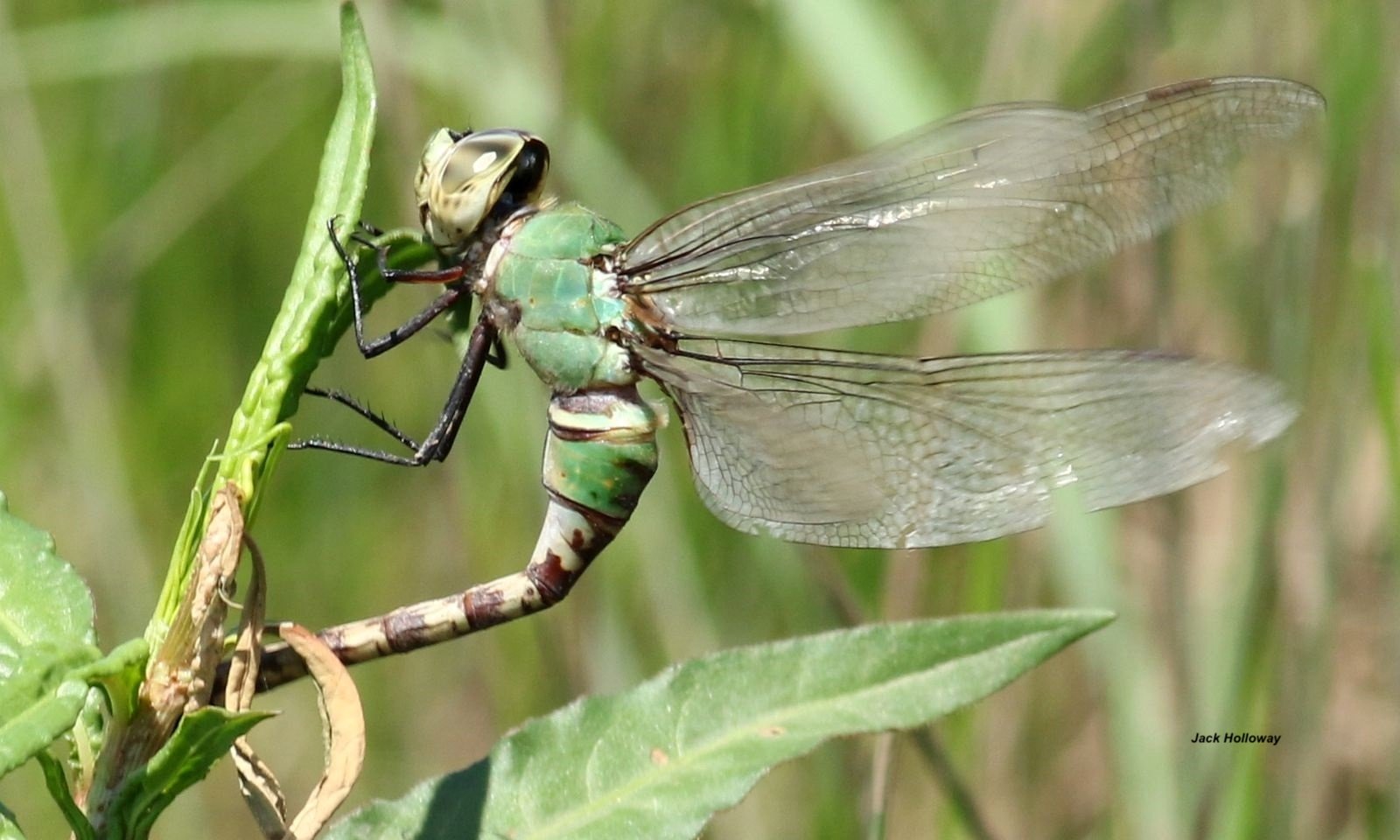
Amazon Darner (Anax amazili) female, Arivaca Cienega, Pima Co., Arizona, USA, 04 August 2026. Copyright Jack Holloway.
The (my) nemesis today is the Amazon Darner (Anax amazili). Not once, but twice it stunned the Arizona Odonata community with unexpected arrivals presented in two very different manners. This dragonfly triggered a personal journey for me that began with its original lone discovery in Arizona on 13 October 2022. My journey was to find and photograph this critter and to put right what it had disrupted.
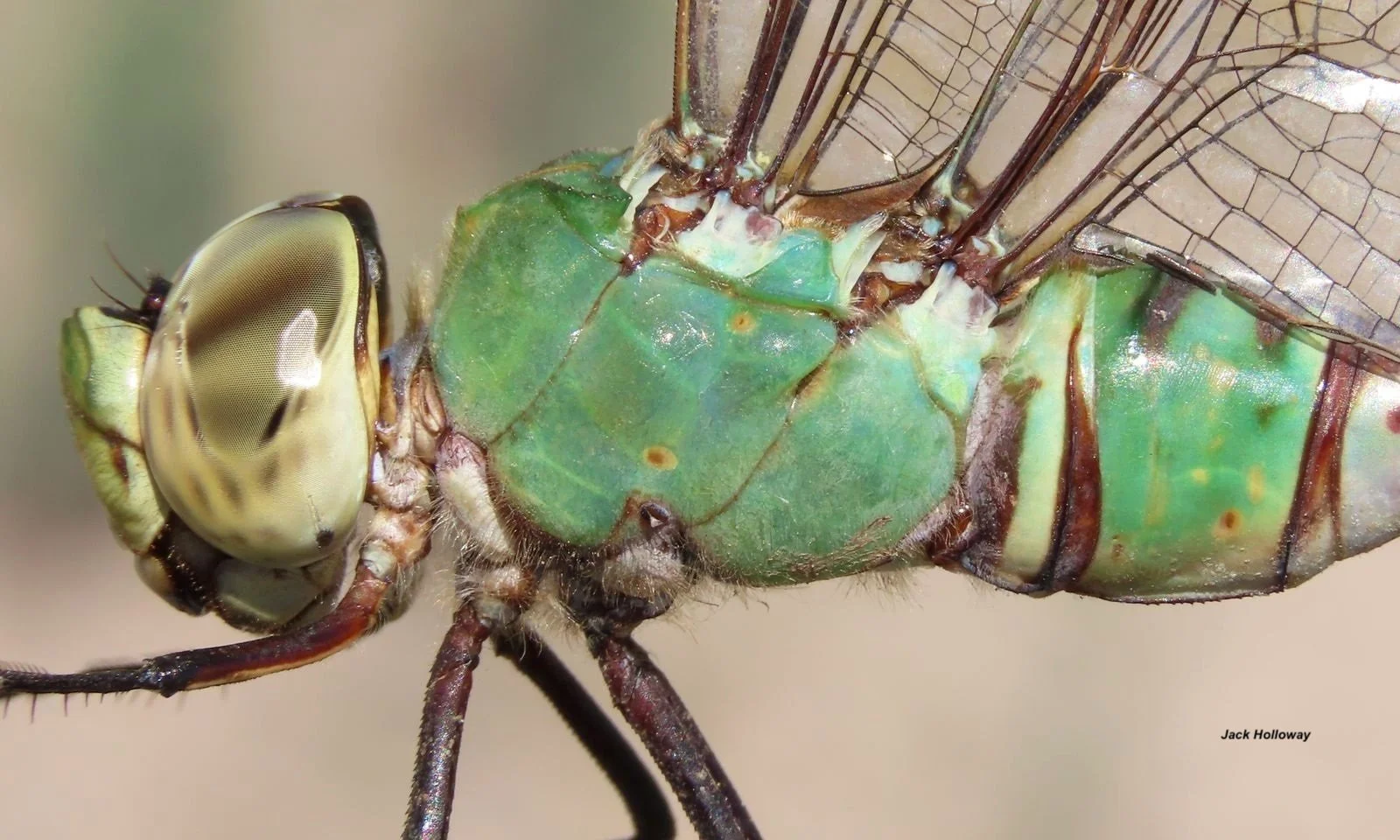
Amazon Darner (Anax amazili) female, Arivaca Cienega, Pima Co., Arizona, USA, 04 August 2026. Copyright Jack Holloway.
When the stunning discovery of a female in Sycamore Canyon (Pima Co.) was announced by Mark Otnes, the Ode community appropriately said, “Wow!” My immediate reaction was quite different as I reflexively slapped my forehead and groaned, “Noooo!” You see, just the day prior, I had finally completed a photo collage of “all” the darner species known from Arizona. Well, known as of 12 October 2022 that is. This collage was made up of individuals I had netted for up-close, clear views. While it was a fun field project that demanded patience, it also fostered the spontaneous invention of new words and phrases when whiffing the net unsuccessfully through the air. I would wager most Odesters will agree that no one ever says, “Gee, darners are such slow, unwary fliers and are easy to catch!”
After a few minutes of staring at that marvelous photo of Arizona’s first Amazon Darner, I shrugged my shoulders and sulked, “Well, 11 out of 12 ain’t bad.” I had basically given up the chance to see Amazon Darner in Arizona and knew finding one to photograph in the state or even the United States was not a certainty. Little did I know I was only three years, nine months, and 23 days away from “Noooo!” to “Yeeess!”.
This species is known for having irruptive, unpredictable dispersions (Bailowitz et al.) from its normal range that spreads from central Mexico, across the Greater Antilles, and down through all mainland countries and into its eponymous Amazon of South America. The few irruptions into the US are evident when the years of all postings from iNaturalist and Odonata Central are put into a table (e.g., TX in 2021, FL in 2022, AZ in 2026). (See the table for details).
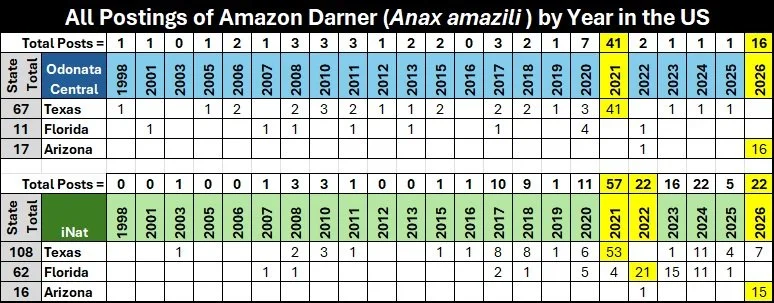
Copyright Jack Holloway.
When the second-ever sighting of Amazon Darner in Arizona occurred at Canoa Ranch on 6/19/26, I was quick to make the 2-hour drive the next day and the day after that. No luck finding it. Then, a sighting at Pena Blanca Lake eight days later requiring a 4-hour drive would certainly be my time, right? Nope. How about the female ovipositing at a tiny pond at Sabino Canyon? Of course not. At that point the word “nemesis” started to flicker in the back of my mind.
The good news from Sabino was the consolation prize of a Black-winged Dragonlet (Erythrodiplax funerea) which is rarer with few sightings in the United States. That dragonlet, plus the cooler temps just under 100F at 10am, made the desert hike back to my truck more bearable.
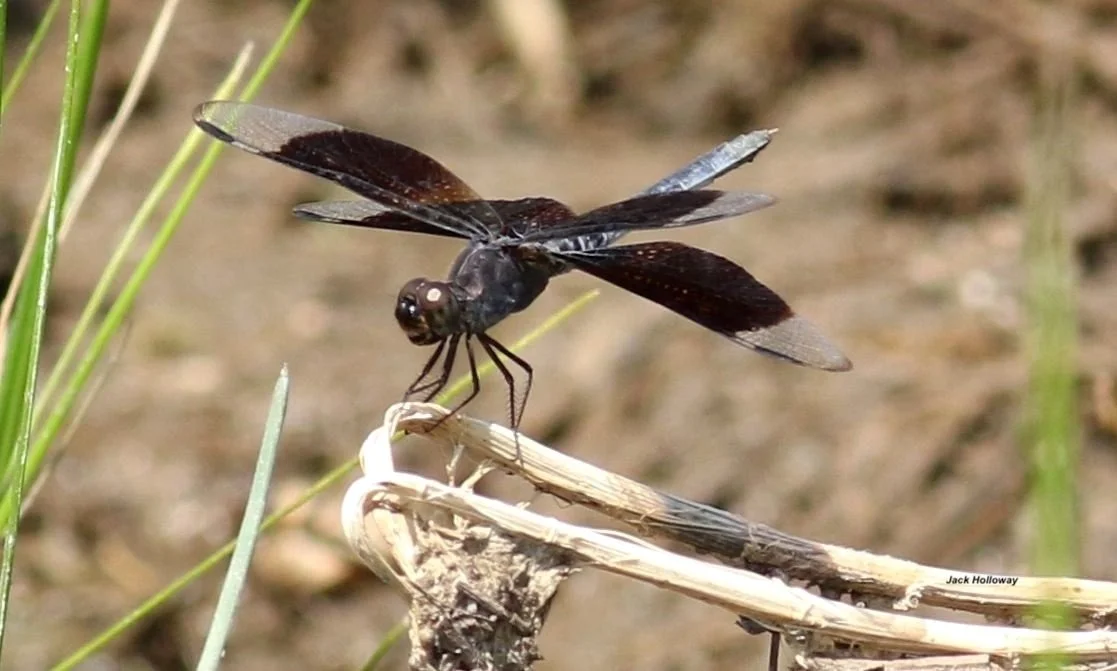
Band-winged Dragonlet (Erythrodiplax funerea) female, Arivaca Cienega, Pima Co., Arizona, USA, 10 August 2026. Copyright Jack Holloway.
It took only one more instance for “nemesis” to become firmly lodged into my mindset. That was when I noticed someone had posted an unknown darner on iNaturalist. Nine miles from my house. A male. Found dead on the sidewalk. I was looking—virtually—at the first ever male Amazon Darner documented in Arizona. This was 125 miles away from the furthest south location from just a few weeks prior. That was where the enigma began to creep in.
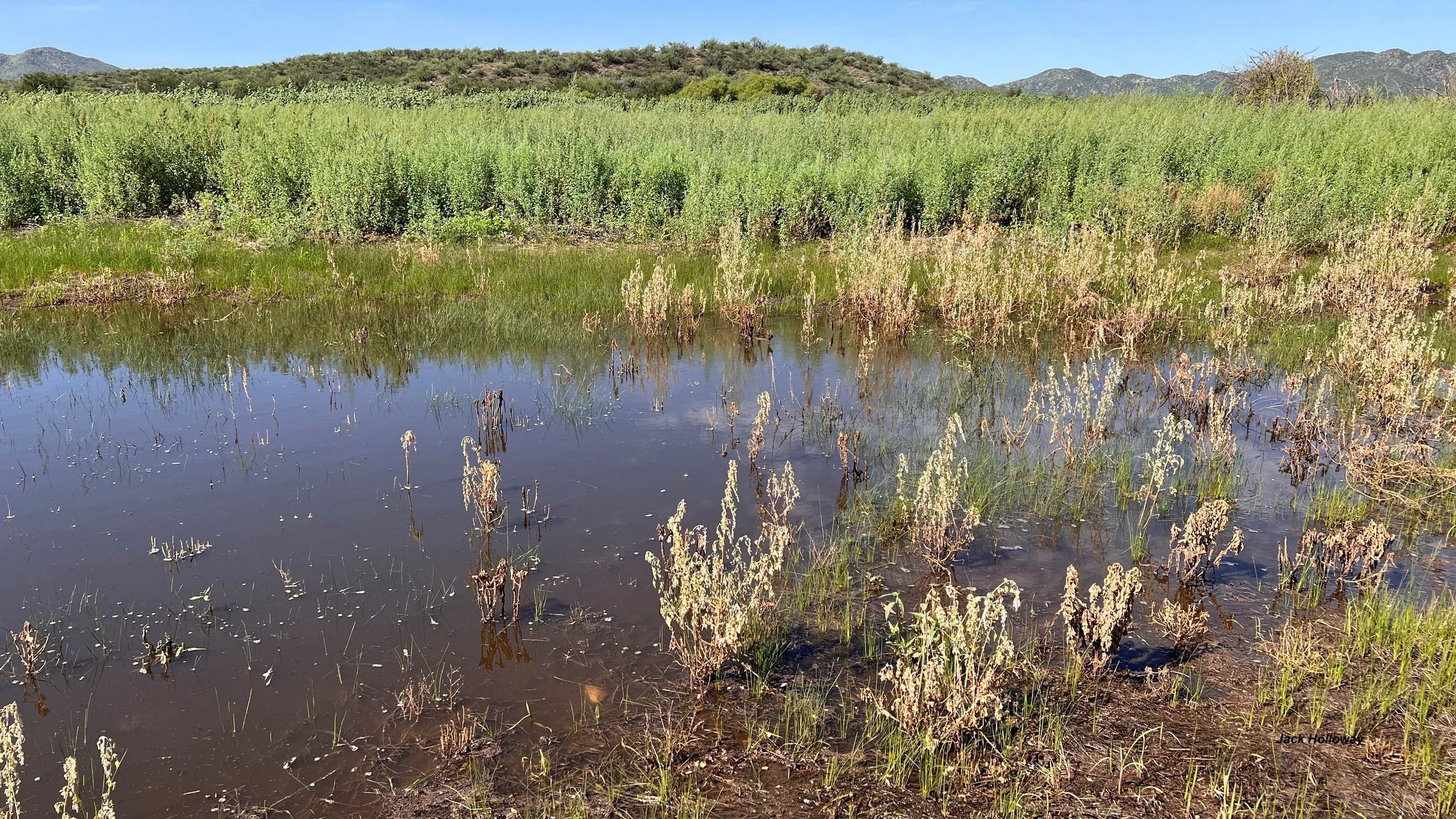
Ephemeral pond at Arivaca Cienega, Pima Co., Arizona, USA, 04 August 2026. Copyright Jack Holloway.
August 01 is when the floodgates to an irruption broke open at a small pond at the Arivaca Cienega, setting up its second stunning arrival story. On August 02, no fewer than 8 females were found at the same pond. It was two days after that (aka, three years, nine months, and 23 days later) that I finally was able to fill in the concluding piece of the collage puzzle with that Amazon. In all, at least 18 individuals have been found at eight sites across a 125-mile swath of Arizona. Oh! And, that visit to Arivaca Cienega produced four different Black-winged Dragonlets. Four! At least five Great Pondhawks (Erythemis vesiculosa) which is also a rare visitor to Arizona and prone to similar irruptions.
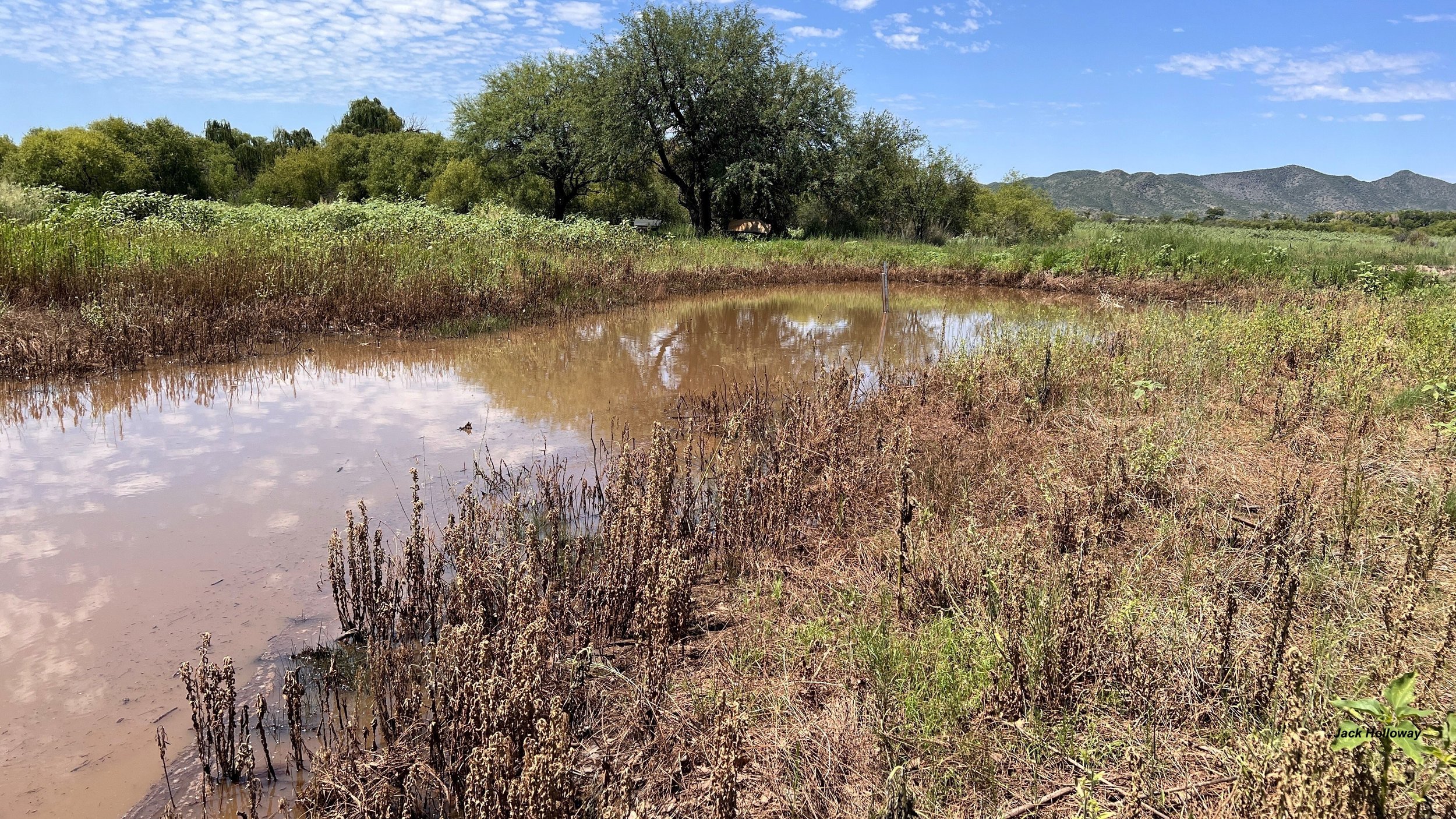
Ephemeral pond at Arivaca Cienega, Pima Co., Arizona, USA, 04 August 2026. Copyright Jack Holloway.
The remaining quandary around this species has been discussed by many in the AZ Odes circle. Several questions remain open. Why, suddenly, are there so many ovipositing females (>15) and only three males? Are there just as many males and where are they? Addressing that last question, Paulson states in his book, “Males less often seen than females, rare at water…probably do not mate at water.” Also pondered is, “Is this irruptive ‘batch’ emerging locally from another female’s ovipositing in prior seasons?” The answer to this latter query appears to be, “Yes.” Several females have been observed with eye coloration and shiny wings that look rather fresh.
Perhaps the compelling question may be, “Is this event an ephemeral irruption or, is this the start of a colonization into the Arizona deserts by Amazon Darner?” Many of us living in southern Arizona have already started to spread out to inspect little-visited ponds and tanks in remote desert areas in search of more treasures. Certainly, there must be other bleak ponds with Amazons and other goodies.
I am glad to have made peace with my nemesis and await the opportunity to meet the next one.
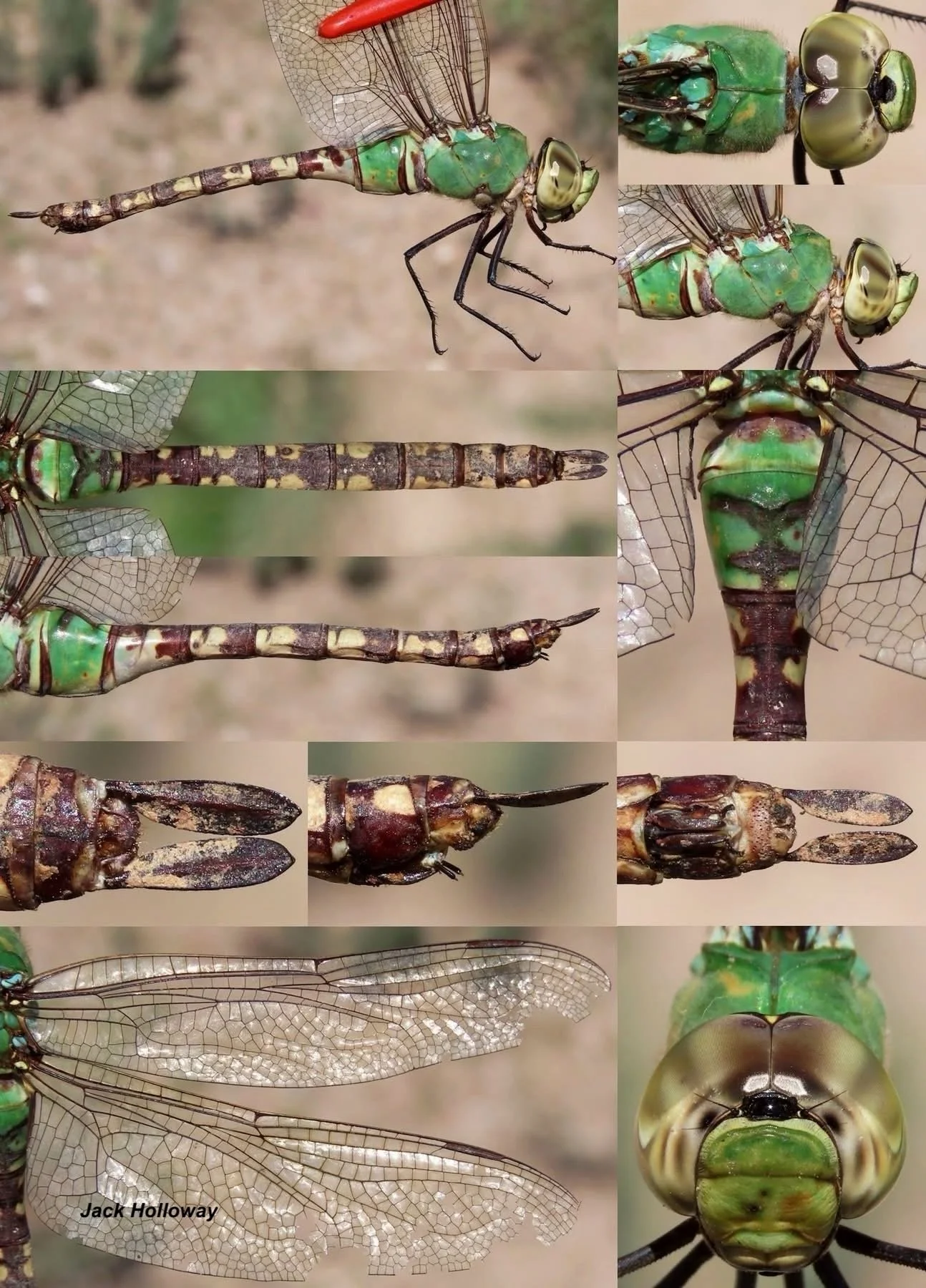
Amazon Darner (Anax amazili) female, Arivaca Cienega, Pima Co., Arizona, USA, 04 August 2026. Copyright Jack Holloway.
Bio: Jack Holloway has roamed between specializing in Odonata, birds, botany or mammal skulls over the years as driven by his propensity to get distracted. He is currently working on a two-volume photographic guide to the damselflies of Arizona where over half the material emphasizes and clarifies the difficult female identification.
