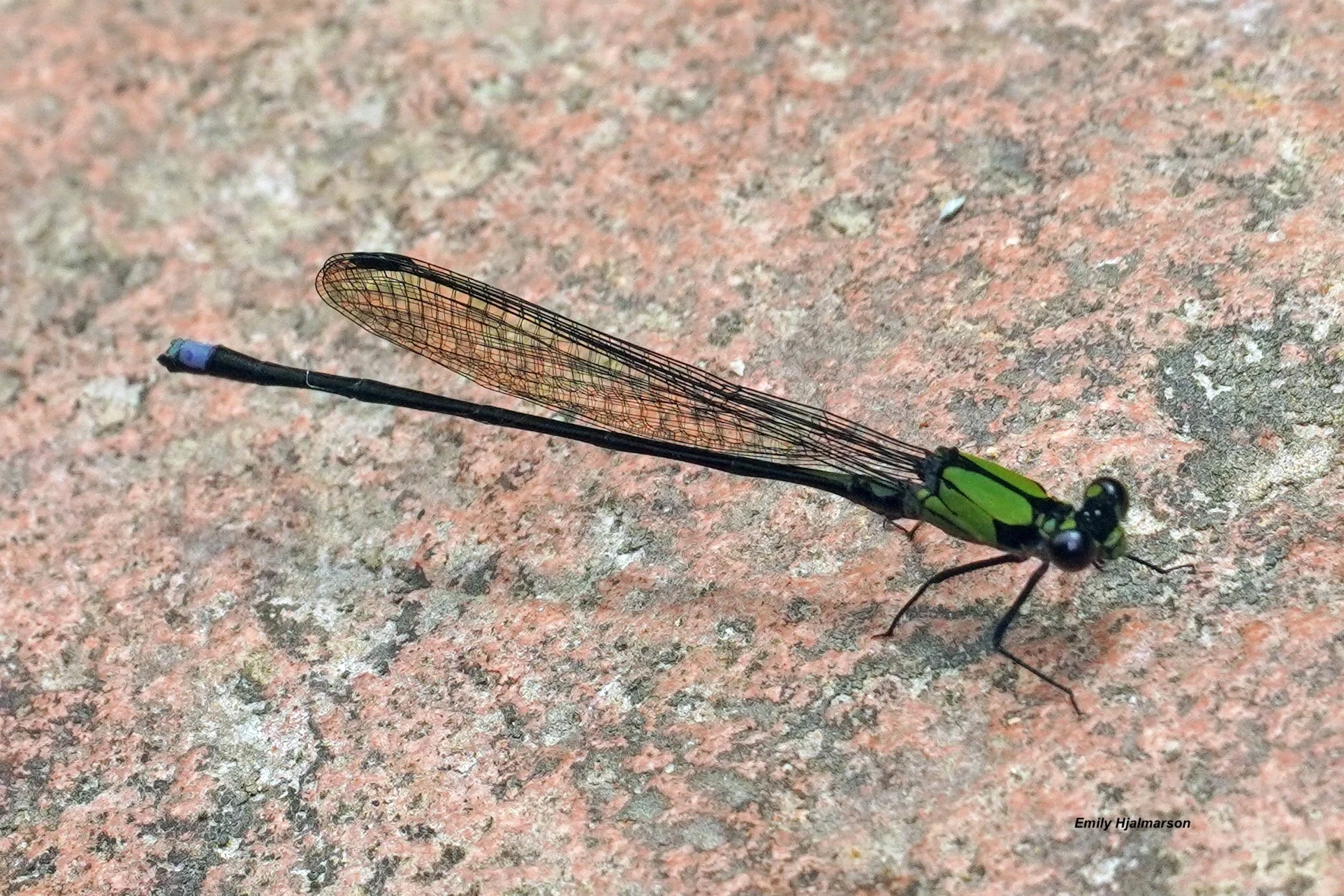
Argia fraudatricula male. Rio Challwayacu, Napo Province, Ecuador. 6 October 2022. Photo: Emily Hjalmarson.
July 2026 Dragonfly Society of the Americas
Species of the Month: Argia fraudatricula
Our July DSA species of the month is (Argia fraudatricula) in the family Coenagrionidae, the narrow-winged or pond damselflies. Little is known about the size and the habitat of this species. Join Wisconsin Dragonfly Society Vice-President Emily Hjalmarson and her husband, Brett Roberts, on their Ecuadorian adventure spotting this rare damselfly.
A Rare Discovery
Butterflies like poop. Yes, you read that right. You might be thinking “this is a blog about odonates, not butterflies, and certainly not about poop!” But bear with me and you’ll see how this fact led to an exciting damselfly rediscovery in Ecuador through our involvement in citizen science.
Butterflies assemble in large groups we call “puddle parties” to sponge up minerals with their proboscis from a variety of substrates, including wet sand, gravel, carcasses, rotting trash, and—as we said—poop. A makeshift, well-frequented highway “rest stop” along Rio Challwayacu in the Napo Province of Ecuador has many of these attractants, making it the perfect mainstay stop for butterfly tours.
The locals probably found us an odd sight when we stopped there with our group in October 2022; pointing cameras at the littered ground of a gravel pull-off spot on the side of the road. Many of our shots from this location have some unsavory background items. We used a more family-friendly image from a different beach for the closeup.
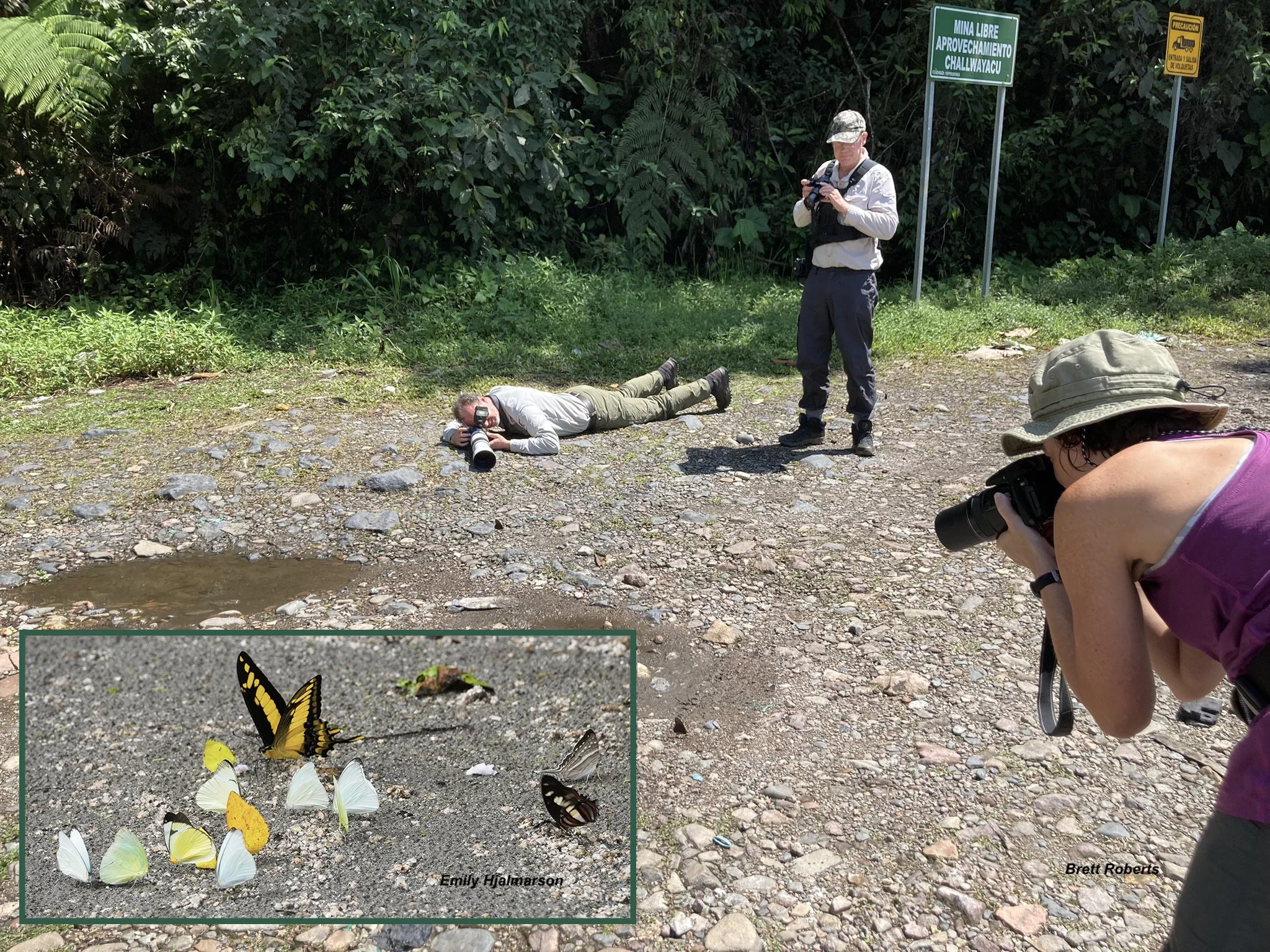
Butterfly photographers in action. Rio Challwayacu pull-off, Napo Province , Ecuador. 6 October 2022. Photo: Brett Roberts. (Inset) Nine species puddle party. Rio Jatunyacu, Tena, Ecuador. 7 October 2022. Photo: Emily Hjalmarson.
On what started out as a sunny day along Rio Challwayacu, my husband, Brett, and I were also on the lookout for odonates. We saw several species new to us, including Argia variegata, Erythrodiplax ines, and a Teinopodagrion species.
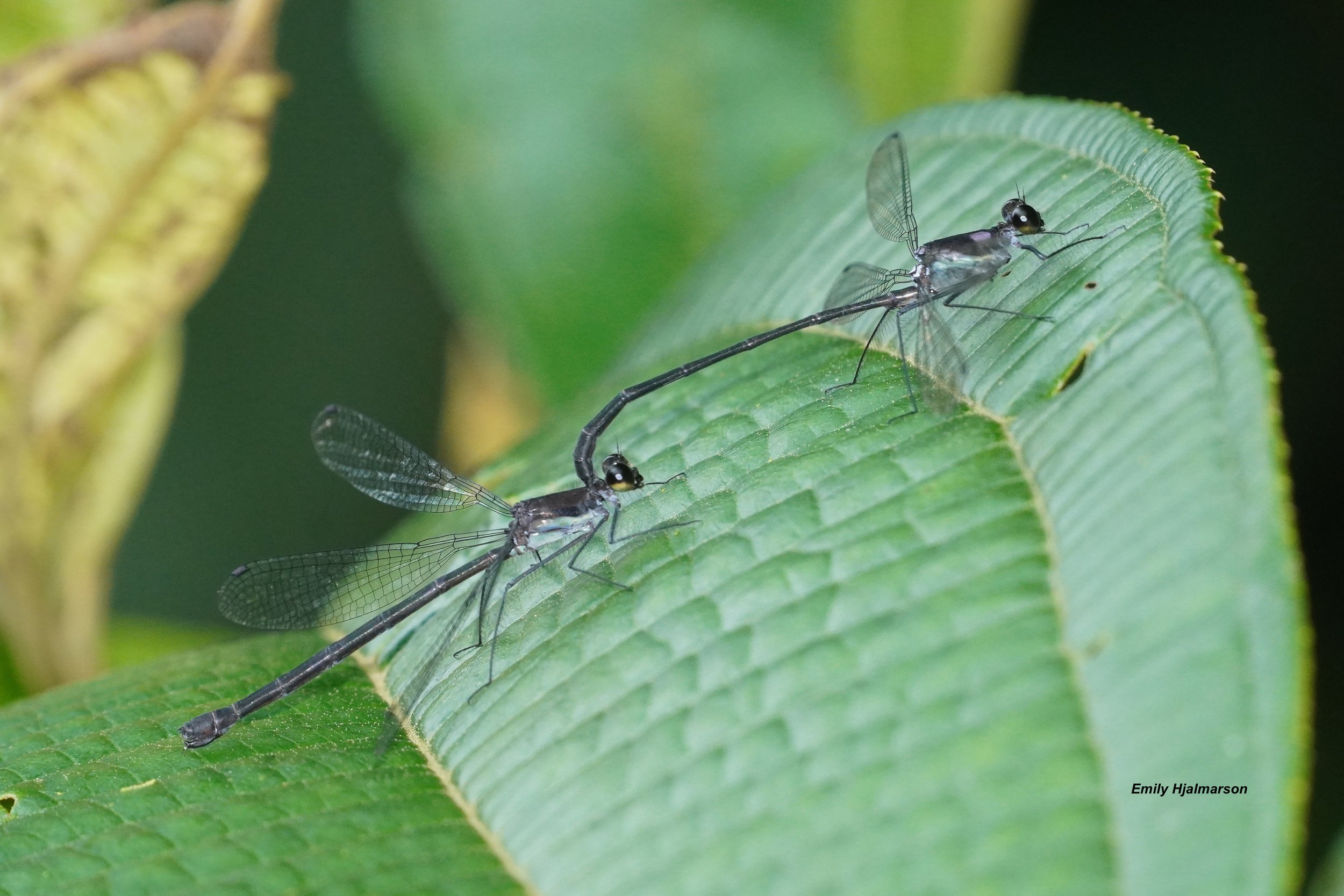
Teinopodagrion, possibly depressum, male and female. Rio Challwayacu, Napo Province, Ecuador. 6 October 2022. Photo: Emily Hjalmarson.
We ventured further upriver from the group and that’s when I saw it: A tiny damselfly with a green (?!) thorax. Knowing this was something special, Brett and I struggled to follow it as it flitted between the pools of water between large pale boulders on the river’s edge. Clouds rolled in from a developing rainstorm. The overcast skies made it more difficult to pick out in flight, and challenging for good photos when it eventually landed again. The gusty winds blew the damselfly out of sight as we approached for closer shots. We couldn’t find any more individuals and had to make a run for it back to the bus before getting caught in the downpour.
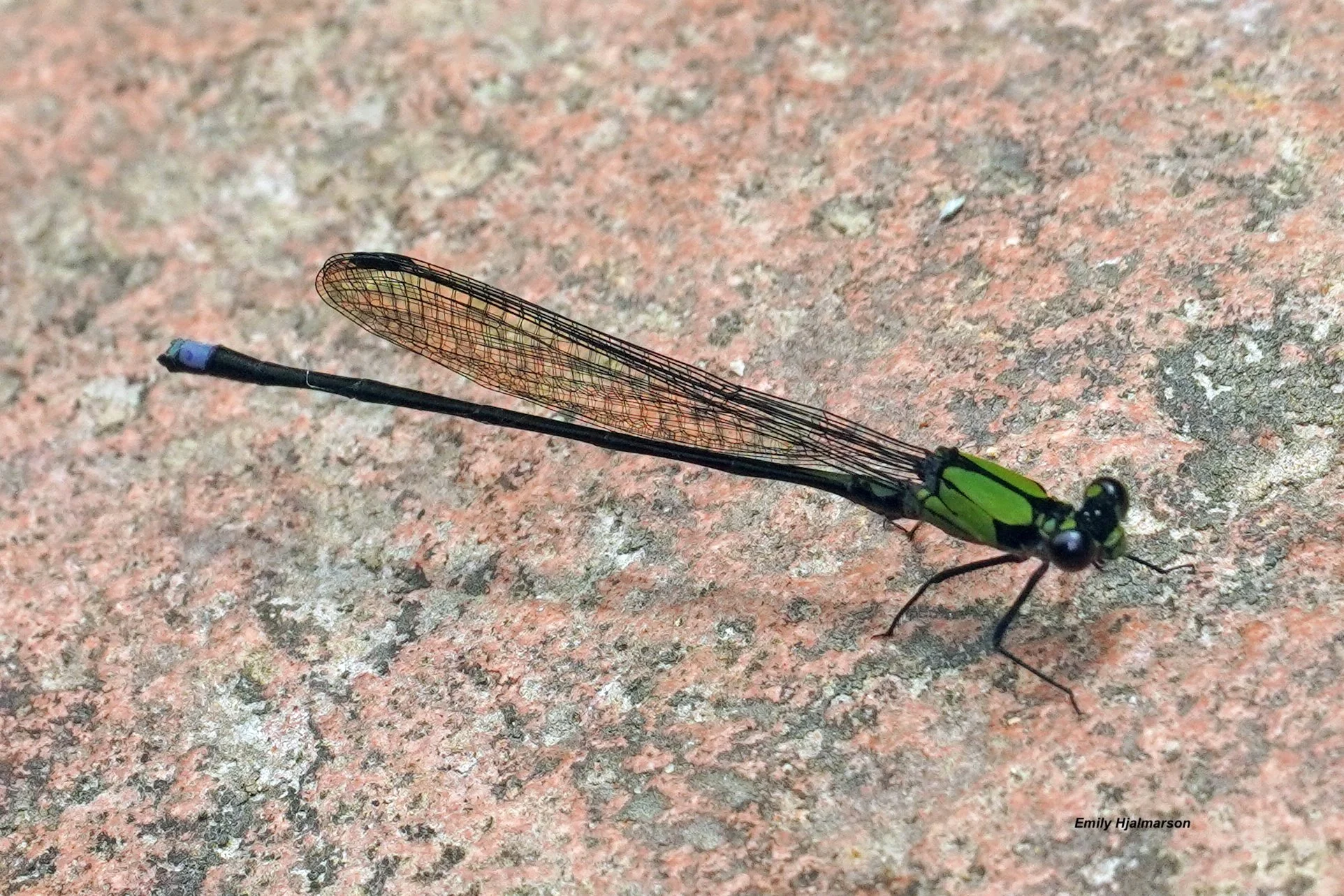
Argia fraudatricula male. Rio Challwayacu, Napo Province, Ecuador. 6 October 2022. Photo: Emily Hjalmarson.
After an amazing trip, we returned home and started the monumental task of going through our 14,000 photos, identifying them, and uploading them to the citizen science database of iNaturalist. We searched for IDs among our own resources, and received valuable help from our tour guide, the iNaturalist community, and other experts. Brett and I ended up with more than 1,800 species across all taxa. But our green damselfly was nowhere to be found in the existing photos anywhere online. Thanks to iNaturalist’s helpful community-based identification, another user got us in touch with Dennis Paulson, who contacted another expert, Rosser Garrison, and he gave us our answer. Argia fraudatricula!
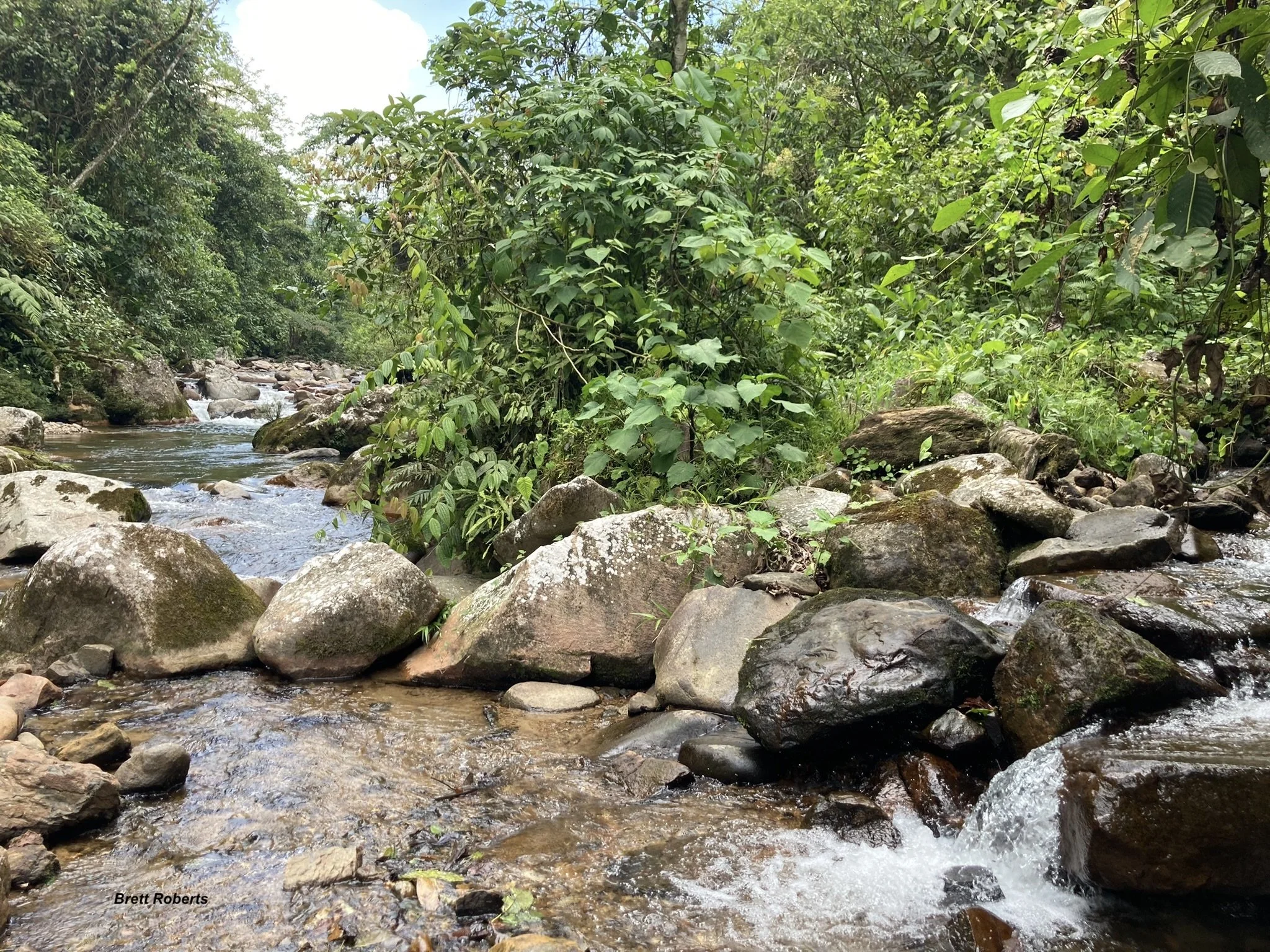
Habitat of Argia fraudatricula. Rio Challwayacu, Napo Province, Ecuador. 6 October 2022. Photo: Brett Roberts.
According to Rosser in 2023, ours was the first photo of a living A. fraudatricula since it was first discovered in Peru in 1936. Specimens were collected during the 1930s and 1940s in Ecuador by William Clarke-Macintyre and David B. Laddey, but it had not been recorded in the 75 years since, despite many field surveys in the area. According to Clarke-Macintyre’s field notes, the green color faded quickly on the deceased specimens he collected, especially since his work was also interrupted by a rainstorm and his lodging was a “provisional palm-tent made hastily.” Our photos confirmed the thorax was indeed green in life, a feature unique to this species within the Argia genus.
Elated with this exciting find, we reached out to our butterfly tour guide, Andrew Neild, who was just about to leave for another tour to the same area. We told him about this special species. He went back with his group to the same site on Rio Challwayacu and found the same species two years later! He took beautiful shots of another male perching on the exact same river boulders.
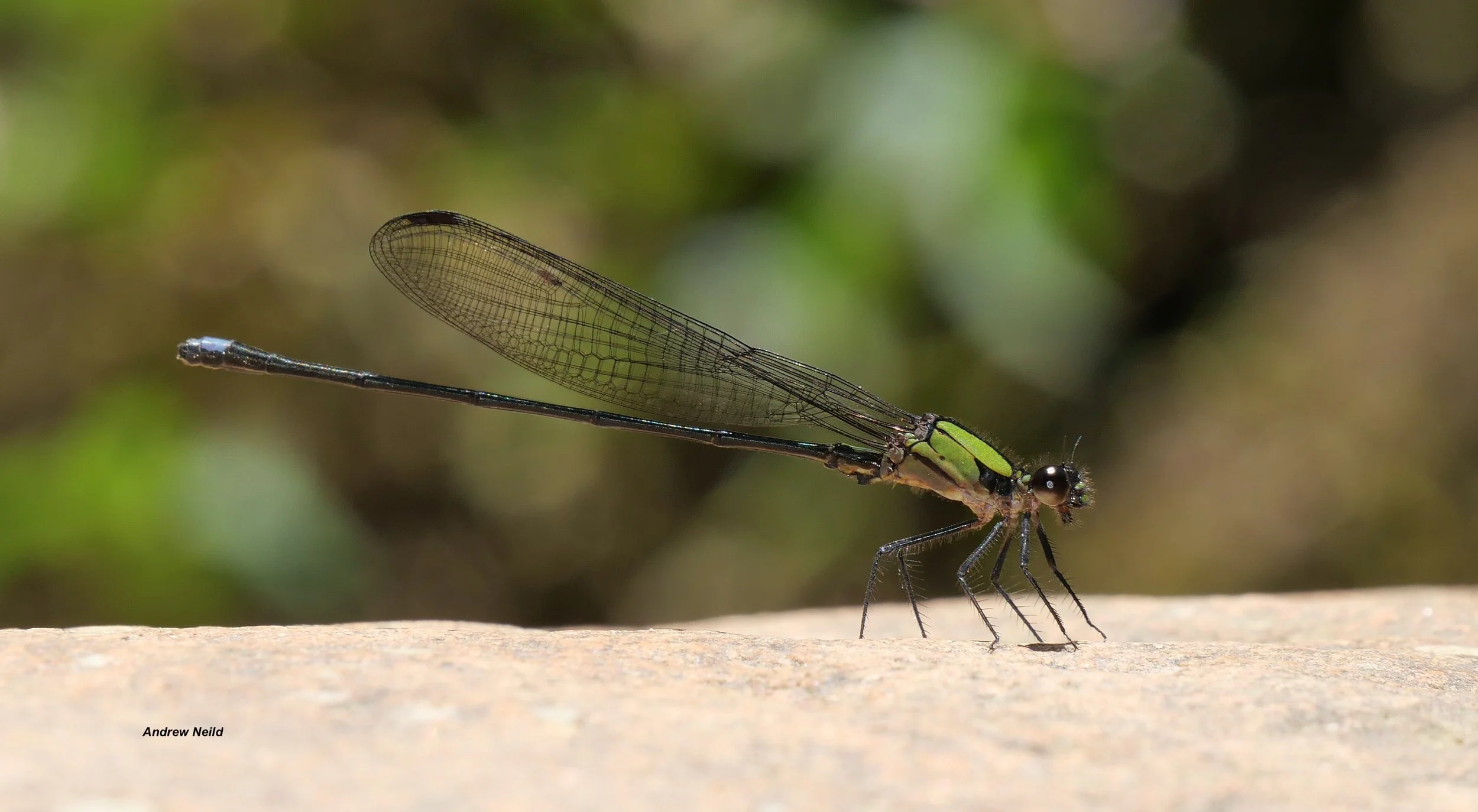
Argia fraudatricula male. Rio Challwayacu, Napo Province, Ecuador. 25 October 2024. Photo: Andrew Neild (used with permission)
Knowing this was a notable find, he took care to document habitat and behavior notes, such as how they were skittish and preferred the quieter pools of water closer to the river between the larger, taller river boulders. He is likely the first to photograph a female, as he found a pair of A. fraudatricula ovipositing in damp moss! Our observation along with Andrew’s and his valuable field notes may be included in a future publication about the Argia genus.
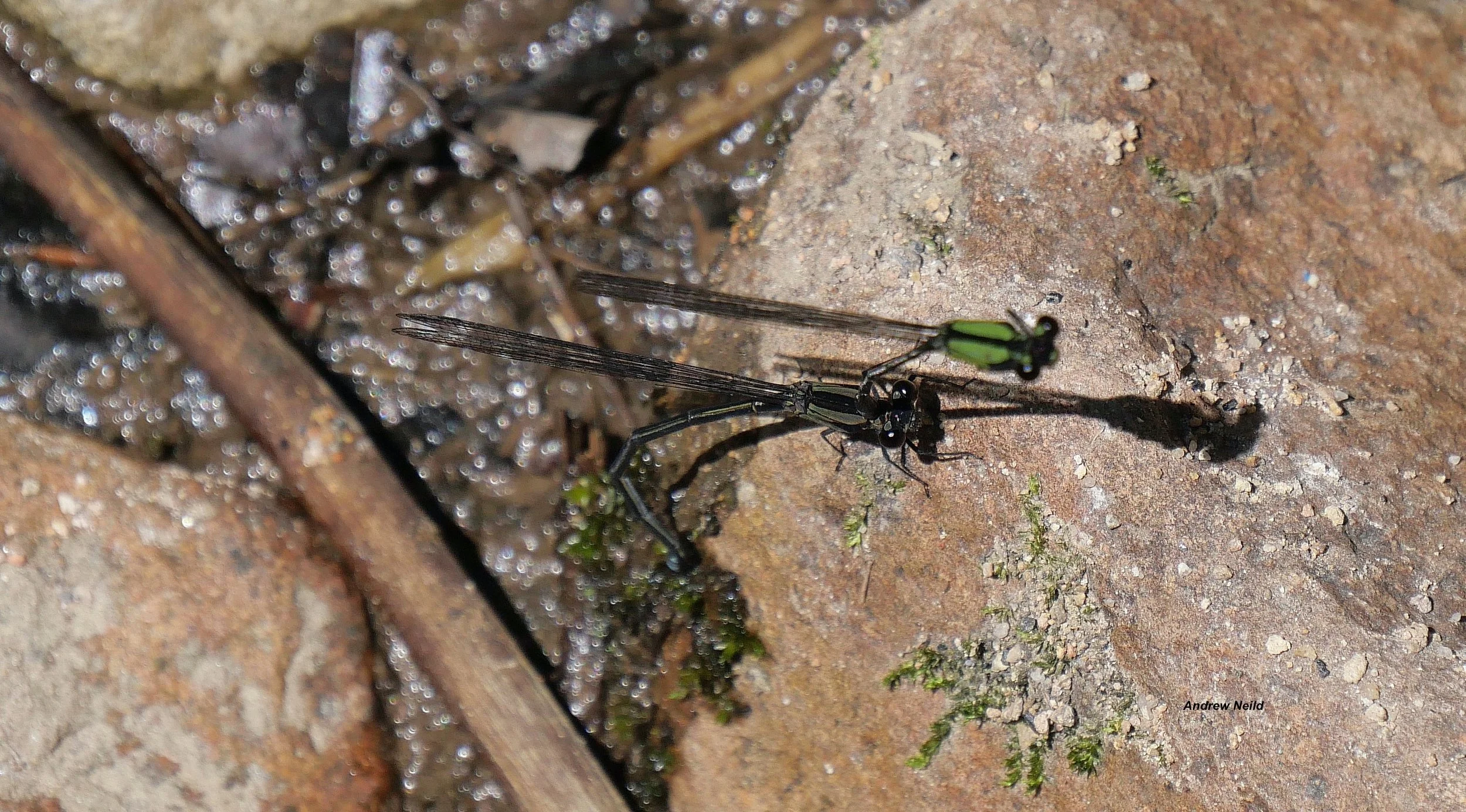
Argia fraudatricula female and male. Rio Challwayacu, Napo Province, Ecuador. 25 October 2024. Photo: Andrew Neild (used with permission)
Since our observation in 2022, iNaturalist has had two other sightings from Ecuador, both from Rio Hollin Grande at a site about six kilometers away from our observation. There is also a more recent iNaturalist submission with an observation date of 2011 in Bolivia, which appears to be on a similarly pale river boulder near a similarly sized flowing river. It’s exciting to see others observing this unique species at different sites.
Despite starting with butterflies on poop, this story is an example of how citizen science can assist in expanding knowledge about lesser-known odonate species. We are honored that our observations from several countries led to our photos being used by various sources, ranging from published field guides to online educational references. We encourage readers to contribute to citizen science, especially when visiting sites less travelled by ode enthusiasts. Who knows? You might find something exciting in an unexpected place!
Emily Hjalmarson’s love of odonates started with her graduate studies in Oklahoma. She is currently the vice-president of the Wisconsin Dragonfly Society. Emily and her husband, Brett Roberts, are all-around naturalists and major contributors to various citizen-science platforms including iNaturalist and a Wisconsin-based odonate database that she volunteers to manage. They frequently travel around their home state surveying for odes, and have recently branched out to explore other states in the United States and countries like Bulgaria, Ecuador, and Peru.
